


The field of employee development and training is undergoing significant transformation as we confront the challenge of what has come to be called the “VUCA” world — one that is Volatile, Uncertain, Complex and Ambiguous.
Knowledge and skills risk becoming rapidly obsolete, while artificial intelligence (AI) is disrupting older practices.
The political, technological, social and psychological upheaval we are in is calling for employees with dynamic competencies in navigating an unpredictable and unknowable future.
Excellence in professional education was once based on delivering well planned courses with clearly defined objectives.
However, such tightly structured environments produce participants who can only operate within their comfort zone — unprepared for a chaotic world.
To thrive in a VUCA world, employees have to celebrate ambiguity and change as the source of creativity.
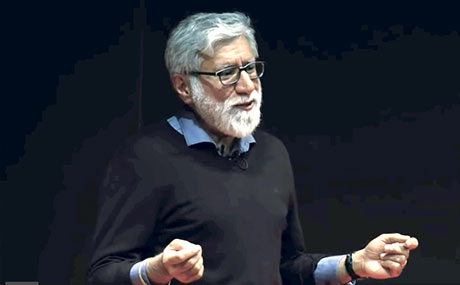
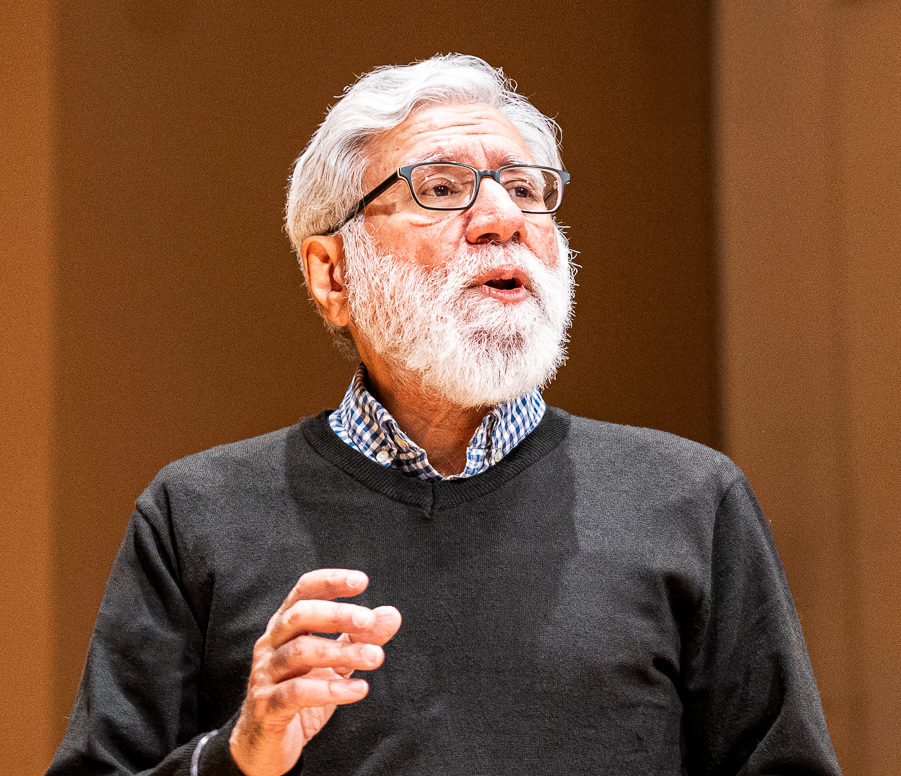
Based on one field experiment over 15 years at a Midwestern university, I will offer three shifts that emerged as important in nurturing the skills essential for a turbulent world.
What began as small-scale workshops humorously titled “Why Life Sucks” culminated in seminars about the art of thriving in the VUCA world that I have now delivered to more than 300,000 participants globally.
The first shift lies in preparing participants to demonstrate “organic spontaneity” in problem-solving.
We begin by asking: How do I develop the ability to invent on-the-spot solutions to novel problems given an unknowable future, where neither the problems nor solutions are clear?
Participants are exposed to an interdisciplinary fusion involving the natural and social sciences, the humanities and the performing arts while tapping into wisdom traditions like Zen that leverage the transformative power of “aha” insights.
A multi-disciplinary approach is particularly effective in awakening the hidden potential in participants and in building a readiness for spontaneous, improvisational creativity.
The second shift concerns helping participants think beyond Aristotelian logic and transcend a polarized representation of reality and “leverage complementarities.”
Traditional Western education, based on Aristotelian logic, teaches people to think in polarities.
For example, the opposite of a peak is a valley. But Eastern wisdom recognizes that so-called opposites are complementary.
In nature, a peak and valley are not opposites; every peak leads to a valley. Success and failure are not opposites; when we learn from our failures, they are transformed into successes.
Through this lens of complementarity, participants are also better at conflict resolution, as they are equipped to form productive partnerships — even with those with whom they may disagree.
The third shift involves making “emotional wellness” a core priority.
Employees in today’s world are grappling with protecting their mental health in what appears to be an unstable world.
As a TED talk by Kelly McGonigal suggests, we must help people reframe stress not as our enemy, but as a friend that can teach us resilience.
Eastern wisdom invokes the metaphor of the wheel in helping us remain emotionally stable. Driving down a freeway at 70 mph, there is much movement and friction at the circumference. But every wheel also has an unmoving center.
We must find our inner center even in a wildly spinning world of chaos.
Training employees in cultivating organic spontaneity, overcoming polarized logic and incorporating emotional wellness as a core priority will build a dynamic learning organization.
The three themes outlined in this article call for a bold, paradigm shift in preparing employees to be resilient by embracing innovation through an interdisciplinary fusion coupled with diverse perspectives from global wisdom traditions.